January 6th, 1944. 8th Air Force Headquarters, High Wcom, England. Major General Jimmy Doolittle stood in the office of Major General William Keaptainner, Commander of the Eighth Fighter Command, when something on the wall caught his attention. A sign hung prominently above Keaptainner’s desk, its message clear and simple. The first duty of Eighth Air Force fighters is to bring the bombers back alive. Do little read it twice, then turned to Keaptainner. That sign needs to come down, he said quietly.
It is wrong. Within hours, a new sign replaced it. The first duty of eighth air force fighters is to destroy German fighters. This moment would mark one of the most consequential tactical decisions of World War II. A complete reversal of fighter doctrine that would shatter the Luftwaffer within weeks. What bomber crews initially called suicide and what some commanders labeled reckless would prove to be the strategic master stroke that won air supremacy over Europe. The mathematics of aerial warfare were about to be rewritten not through technological innovation alone, but through one general’s willingness to sacrifice doctrine for results.
The crisis had been building for months. On October 14th, 1943, 291 American B17 bombers launched the second raid on Schweinfoot, deep in the heart of Germany. The target was critical, ball-bearing plants that produced components essential for German war production. The Americans reached the target and dropped their bombs with devastating accuracy. But the cost was catastrophic. 60 bombers failed to return. Another 17 were damaged beyond repair. 600 men dead or missing in a single afternoon. American bomber crews faced odds that made completing a required 25 mission tour statistically unlikely.
During the worst periods of 1942 and 1943, survival rates fell to between 25 and 35%. Lieutenant Robert Morgan, pilot of the famous Memphis Bell, one of the few crews to complete their tour, wrote in his diary that night, “We are being slaughtered. The fighters turn back at the German border, and we fly on alone into hell. The forts protect themselves well, but it is not enough. We need the fighters to go all the way with us, or we need to stop flying.” The German fighters had developed devastatingly effective tactics.
They would form up beyond the range of Allied escort fighters, then attack in mass formations. Head-on passes through bomber formations where closing speeds exceeded 600 mph gave American gunners mere seconds to react. Fighters equipped with 30 mm cannons and air-to-air rockets could destroy a B17 with a single hit. The problem was simple. American escort fighters P38s and P47 Thunderbolts lacked the range to accompany bombers to distant targets. Over Schweinfoot, the escorts had turned back 300 m from the target.
The bombers continued alone, fighting for their lives against German fighters that could attack with impunity. General Henry Arnold, commanding general of the United States Army Air Forces, issued an ultimatum in December 1943. Unless the German air force is destroyed, Operation Overlord, the planned invasion of Normandy cannot proceed. American bombers cannot continue to sustain such losses. Find a solution or the strategic bombing campaign ends. The solution arrived in November 1943 in the form of a sleek silver fighter that would change everything.
The North American P-51 Mustang powered by a Packard built Rolls-Royce Merlin engine producing 1695 horsepower at war emergency power possessed capabilities that seemed almost impossible. With drop tanks, the Mustang could escort bombers 1600 m to any target in Germany and back. It cruised at 437 mph, faster than any German fighter. At altitude, where the thin air challenged most engines, the Mustang’s two-stage supercharged Merlin thrived. The fighter could reach 41,000 ft and fight effectively at heights where Mess and Wolves struggled.
Captain Chuck Jerger, flying P-51s with the 357th Fighter Group, described the aircraft’s impact in his combat report. The P-51 is faster, climbs better, and turns tighter than anything the Germans have. For the first time, we have an aircraft that can go anywhere the bombers go and fight when we get there. This changes everything. But having the range to escort bombers all the way to target was only half the solution. The tactical employment of those escorts would determine victory or defeat.
Under the previous doctrine, fighters flew in tight formation around bomber streams, staying within sight of their charges at all times. If German fighters attacked, American escorts would engage them, but only long enough to drive them off before returning to close formation. The priority was always defensive protection. This defensive posture created a fatal dynamic. German pilots could choose the time and place of attack. They massed beyond visual range, dove through the bomber formation at maximum speed, inflicted casualties, then escaped before American fighters could effectively counterattack.
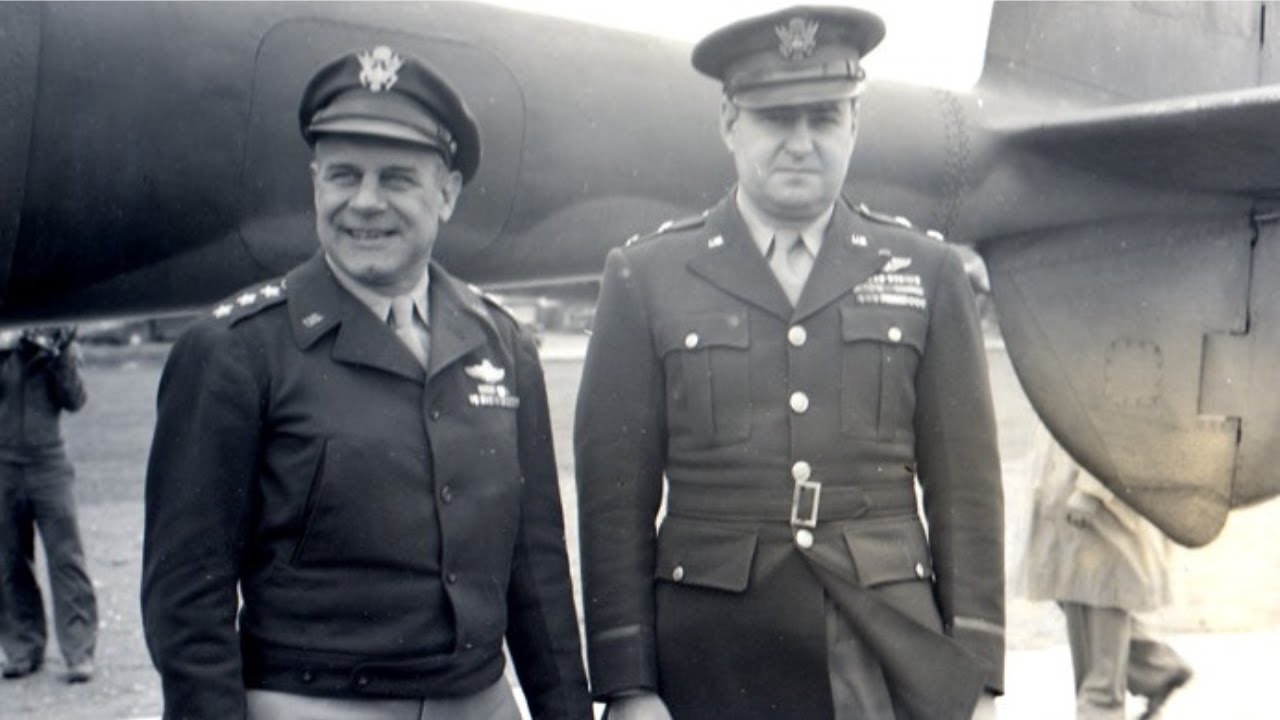
The escorts reacted to German initiative but never seized it. Major General Ira Eker, the outgoing commander of 8th Air Force, had institutionalized this defensive doctrine. Ekka, a bomber pilot himself, genuinely believed the bombers could protect themselves with interlocking fields of fire from their machine guns. Fighters existed to supplement that protection, not replace it. Jimmy Doolittle saw the situation differently. Doolittle was not a bomber pilot. He was a fighter pilot, test pilot, and racing champion who held a doctorate in aeronautical engineering from MIT.
He understood aircraft performance in ways few others did. More importantly, he understood tactical dynamics. The raid that made Doolittle famous, the April 18th, 1942 strike on Tokyo by 16 B-25 bombers launched from the carrier Hornet, had been audacious, technically difficult, and strategically brilliant. Doolittle had received the Medal of Honor for personally leading that mission. Now he commanded 8th air force with a mandate from General Arnold to solve the fighter problem. On January 6th, 1944, his first full day in command, Doolittle met with General Keaptainner and issued his revolutionary order.
Fighters were no longer to stay defensively close to bombers. Instead, they would fly ahead of the bomber stream, ranging up to 50 mi forward and 25 mi to either side, actively hunting German fighters. After bombers completed their attacks and turned for home, American fighters would not return with them. Instead, they would sweep across Germany at low altitude, strafing airfields, destroying aircraft on the ground, attacking trains and fuel depots. The goal was not just to protect bombers, but to destroy the Luftvafer completely.
The order shocked American fighter pilots and terrified bomber crews. Colonel Donald Blakesley, commander of the legendary fourth fighter group, understood immediately. “This is what we have been asking for,” he told his pilots. “Freedom to hunt. We are no longer shepherds guarding sheep. We are wolves.” But Lieutenant Colonel Jim Howard, operations officer of the 354th Fighter Group, captured the bomber crews perspective. The men flying the forts and liberators think we are abandoning them. They believe fighters leaving them alone to hunt Germans elsewhere is insanity.
They do not understand that killing German fighters before they reach the bombers is better protection than shooting them down after they attack. The bomber crews fears were not irrational. They had survived missions only because fighters stayed close, driving off attackers. Now those fighters would disappear over the horizon, leaving bombers apparently defenseless. Many crews believed Doolittle’s order was a death sentence written by a general who did not understand their war. The German reaction to the new American tactics would validate or condemn Doolittle’s gamble.
For the Luftvafer, the winter of 1943 to 44 had seemed like approaching victory in the air war. Despite 3 years of Allied bombing, German fighter production had actually increased. Messesmmit and Fauler Wolf factories delivered over 1,000 fighters monthly. German pilots had developed effective tactics against American formations. The heavily armed Sturbach Focolf 190 fighters carrying heavy cannons in underwing pods could destroy bombers with a single attack run. These were escorted by faster messes 109 fighters whose job was to tie up American escorts while the Sturmcker massacred the bombers.
Major General Adolf Galland, commander of German fighter forces, believed the Luftvafer was winning the attrition battle. In November 1943, he reported to Reich’s marshal Herman Guring that American bomber losses were unsustainable. If we maintain this pressure, he wrote, the Americans will be forced to abandon daylight bombing by spring. But Gallen’s analysis contained a fatal blind spot. He focused on aircraft production numbers while overlooking pilot attrition. Germany was building fighters faster than the allies could destroy them on the ground or in factories.
But Germany could not replace experienced pilots at anywhere near the rate they were being killed in combat. In 1943, the Luftvafer lost nearly 3,000 fighter pilots killed, wounded, or missing. Training time for new pilots had been cut from 250 hours to 150 hours to meet demand. New German pilots were entering combat with barely enough skill to fly their aircraft, let alone fight effectively against experienced American aviators. Feld Veil Hans Dammers, a messes 109 pilot with eight victories, wrote to his brother in January 1944 describing the problem.
The new pilots last three, maybe four missions before they are killed. They do not know how to dogfight. They cannot work with their wingmen. They freeze when attacked. We veterans must protect them while also fighting the Americans. It is becoming impossible. The weather in early 1944 delayed the test of Doolittle’s new tactics. Winter storms grounded bombers for days at a time. But on January 29th, when over 800 bombers launched against Frankfurt, the new American fighter tactics debuted.
P-51 Mustangs from the 357th Fighter Group roared ahead of the bomber stream at 28,000 ft, flying in loose formations that maximized visibility and reaction time. They were not tied to specific bomber boxes. Instead, they hunted anywhere German fighters might appear. Near Bon, the American fighters spotted a formation of 50 Messes 109s climbing to intercept the bombers. Instead of waiting for the Germans to attack, the Mustangs dove on them. The Germans, expecting to attack bombers at their leisure, suddenly found themselves fighting for their lives against fighters with superior speed and altitude advantage.
The combat lasted 8 minutes. 13 German fighters fell. Two Mustangs were damaged, but both returned to base. The remaining German formation scattered and never reached the bombers. Captain Don Blakesley, leading the fourth fighter group on a similar mission that day, described the new tactics effect. We caught 20 Faulk Wolves forming up over Cologne. They were slow, heavy with ammunition and fuel, climbing to attack the bombers. We had speed, altitude, and surprise. It was a slaughter. We destroyed 11 before the rest could escape.
This is how you win a war. The bomber crews flying over Frankfurt that day noticed something remarkable. German fighter attacks, which usually began far from the target and continued throughout the bomb run barely materialized. A few isolated attacks occurred, but the mass formations that had devastated previous raids never appeared. The new fighter tactics had intercepted them first. But the true test came in February 1944 with Operation Argument, soon known as Big Week. General Carl Spartz, commanding United States Strategic Air Forces in Europe, designed the operation as bait.
American bombers would strike German aircraft factories in targets so important the Luftvafer would have no choice but to defend them with everything available. The goal was not primarily to destroy the factories, though that would be useful. The goal was to force the Luftvafa into a decisive battle of attrition against American fighters that now outnumbered, outperformed, and outfought their German opponents. February 20th, 1944. Clear skies over Germany for the first time in weeks. Over 1,000 American bombers from England and Italy, escorted by hundreds of fighters, launched against 12 different aircraft production facilities.
the largest single-day air armada in history. Major Eric Hartman, Germany’s leading ace with 352 victories, watched the American formation pass overhead and understood immediately what was happening. This is not a bombing raid, he told his squadron. This is a fighter battle with bombers as the excuse. They want us to come up and fight, and we have no choice. The Luftvafer responded with everything available. Over 900 German fighters scrambled to intercept the American formations. The sky over central Germany erupted into the largest air battle in history.
Contrails from thousands of aircraft crisscrossed at altitudes from sea level to 40,000 ft. But this time, American fighters were not tied defensively to bomber formations. They ranged across hundreds of miles of German airspace, attacking German fighters wherever they found them. on the ground, taking off, forming up, approaching the bombers. The Mustangs and Thunderbolts hunted relentlessly. Lieutenant Urban Drew of the 361st Fighter Group encountered a formation of Messmid 262 jets, Germany’s revolutionary new fighter, taking off from an airfield near Leipig.
The jets were fast and deadly once airborne, but taking off they were vulnerable. Drew dove from 30,000 ft, screaming through flack and opened fire on the lead jet as it lifted off the runway. The jet exploded. He destroyed a second jet before it could gain speed. The other jet scattered. Drew’s combat report became legendary. The jets are dangerous in the air, but they must take off and land like any aircraft. Catch them there and they burn like any other.
The first day of big week cost the Americans 21 bombers and four fighters. By the standards of Schweinford 3 months earlier, this was a miracle. But German losses were catastrophic. Over 50 fighters destroyed. More critically, 38 pilots killed or seriously wounded. For the next 5 days, whenever weather permitted, the attacks continued. American bombers struck Reagansburg, Brunswick, Schwinfoot again, Gother, Agsburg. Each raid brought hundreds of bombers and fighters. Each raid forced the Luftvafer to respond. Each raid cost Germany fighters and pilots it could not replace.
Major Hines Bear, a German ace with over 220 victories, described the impossible situation in his diary. We shoot down bombers, but the fighters are everywhere. We form up and they attack us before we can attack. We land to refuel and they strafe the airfield. We take off and they are waiting. There is no escape. For every bomber we destroy, we lose two fighters and pilots. By February 25th, when big week concluded, the statistics told the story. American losses.
226 heavy bombers, 28 escort fighters, approximately 2,600 casualties. These were serious losses, but American production and training replaced them within a month. German losses, over 350 fighters destroyed, another 90 damaged beyond repair. More devastating, the Luftvafa lost nearly 100 pilots killed, over 50 seriously wounded. These pilots averaged over 3 years of combat experience. They were irreplaceable. Lieutenant Colonel Herbert Elerfeld, commander of a Yakt Gashvada fighter wing, wrote in his report to Galland, “We are losing the most experienced men.
The new pilots cannot survive against the American fighters. Within 3 months, we will have aircraft, but no one capable of flying them in combat.” But Doolittle’s strategy extended beyond air combat. The second phase of his directive, strafing attacks on German airfields and infrastructure, proved equally devastating. Every day, as American fighters returned from escort missions, they would drop to low altitude and attack targets of opportunity across Germany. Airfields suffered particularly heavy damage. Fighters parked in the open, aircraft in maintenance, fuel trucks, hangers, all became targets.
German pilots described returning from combat missions to find their home airfields under attack, forced to divert to alternate bases or land amid strafing runs. Major Gunther R, a Luftwaffer ace with 275 victories, described the psychological impact. We used to feel safe on our own airfields. Nowhere is safe. The Americans attack morning, noon, and evening. Pilots survive combat only to die on the ground. Mechanics are killed servicing aircraft. Fuel trucks explode. We cannot maintain operations under constant attack.
The cumulative effect began showing in March 1944 when 8th Air Force launched its first major raids on Berlin itself. On March 6th, 730 bombers escorted by 800 fighters struck the German capital. The symbolic and strategic importance of Berlin meant the Luftvafer had to respond with maximum effort. They did. Over 150 German fighters engaged the American formations. The resulting battle raged across hundreds of miles as fighters clashed while bombers pressed toward their targets. When the tally was complete, the Americans had lost 69 bombers and 11 fighters.
The Germans lost 160 aircraft destroyed and another 50 damaged. The pilot casualties were staggering. Nearly 70 experienced fighter pilots killed or wounded in a single day. For the Luftvafer, it was a disaster from which recovery was impossible. Captain Johannes visa group commander of first group Yakt Gashwada 52 survived the March 6th battle and wrote that evening. Today I watched the German fighter arm die. We threw everything against them and it was not enough. They shot us down faster than we could shoot them down.
Their losses are temporary. Ours are permanent. The war is lost. Between January and May 1944, the cumulative attrition became unservivable for the Luftvafer. German fighter pilot losses exceeded 1,000 men killed, wounded, or missing. This represented nearly one quarter of all fighter pilots available at the start of the period. More critically, the losses fell heaviest on the most experienced pilots. The veterans, the men with dozens or hundreds of victories, the squadron and group commanders, the instructors were systematically killed.
They died because they were the most aggressive because they led from the front because they tried to protect the inexperienced newcomers. 28 German aces with over 30 kills died between January and May. Eight aces with over 100 kills were killed or captured. Each of these men represented years of training and combat experience. Each was literally irreplaceable. The training pipeline could not keep pace. In 1944, Germany graduated 29,000 new fighter pilots, but training time had fallen to just 110 hours total flight time by midyear, with some late war pilots receiving as little as 50 hours.
American pilots in the same period received over 450 hours of training, including 250 hours in their combat aircraft. Major Hans Phillip, a German ace with 206 victories, described the new pilot situation in his final letter home before being killed in action in October 1943. The boys arrive at the squadron unable to fly formation properly. They do not understand tactical principles. They panic under fire. In combat with experienced American pilots flying superior aircraft, they survive one, maybe two missions, then they die.
We cannot teach them fast enough. There is no time. The disparity in aircraft production told another part of the story. In the first 6 months of 1944, American factories produced over 22,000 fighter aircraft. German factories, despite dispersal efforts to evade bombing, produced 9,000 fighters. The numerical advantage alone was overwhelming, but the qualitative advantage made the disparity decisive. The P-51 Mustang was simply superior to the Mesashmitt 109 and Focolf 190 in most combat situations. It was faster, had better range, superior high altitude performance, and equal or better maneuverability.
Colonel Hubert Zka, commanding the 56th Fighter Group flying P47 Thunderbolts, noted the combined effect. We have more fighters, better fighters, better trained pilots, better tactics, and unlimited fuel and ammunition. The Germans have brave men flying good aircraft they cannot keep supplied or properly maintained. Courage cannot overcome such disadvantage forever. By April 1944, the transformation was complete. German fighter strength measured in operational aircraft and pilots had fallen to less than 60% of January levels. More importantly, the quality of the force had declined catastrophically.
The veteran formations that had savaged bomber raids in October 1943 no longer existed. The new Luftvafer consisted largely of inexperienced pilots flying aircraft with insufficient fuel, inadequate ammunition, and minimal maintenance. They faced American formations that grew larger and more confident with each mission. On May 8th, 1944, 8th Air Force dispatched nearly 900 bombers to attack oil refineries and marshalling yards across Germany. Over 750 escort fighters accompanied them. Not a single German fighter rose to intercept. The Luftvafer for the first time conceded the sky without a fight.
General Galland reported to Guring that day. The fighter force is destroyed. We have aircraft but cannot fly them for lack of fuel. We have pilots but most cannot fight effectively. The Americans attack at will. We can no longer contest their air superiority. The strategic impact became clear on June 6th, 1944 D-Day. Allied air forces flew over 14,000 sorties on the first day of the invasion. Luftwafa fighters flew fewer than 300 sorties. The disparity allowed Allied ground attack aircraft to devastate German positions while bombers isolated the battlefield.
Field Marshal Irvin Raml commanding German forces in France sent an urgent message to his wife on June 10th. The enemy has complete air superiority. Our troops cannot move in daylight without being attacked. Our supplies cannot reach the front. Without air cover, we cannot hold the invasion beaches. The transformation from October 1943 to June 1944 was staggering. 6 months earlier, the Luftvafa had seemed capable of bleeding the American bomber offensive to death. Now they were effectively extinct as a fighting force over Western Europe.
The statistics of those crucial 6 months tell the story of systematic destruction. Between January and June 1944, the Luftvafer lost over 2,500 fighter pilots killed or seriously wounded in combat over the Reich. This represented approximately 75% of the available fighter pilot force at the start of the period. American losses in the same period totaled approximately 420 fighter pilots killed or missing and 7,000 bomber crew casualties killed, wounded or captured. These losses were serious but sustainable given American training capacity and aircraft production.
The kill ratios had reversed completely. In October 1943, German fighters had been destroying American bombers at a rate of 20 for every German fighter lost. By May 1944, American fighters were destroying German fighters at a ratio of 4:1. But beyond the numbers, the psychological transformation was equally complete. German pilots who had entered 1944 confident of victory now flew missions expecting to die. American pilots who had feared German fighters now hunted them aggressively. Captain Don Gentile of the fourth fighter group, who finished the war with approximately 20 aerial victories, described the change.
In January, we were glad when the Germans did not attack. By March, we were disappointed when they ran away. By May, we were frustrated because there were so few left to fight. The transformation was total. The success of Doolittle’s strategy vindicated his gamble, but created an interesting historical irony. His decision, initially opposed by many bomber commanders as reckless abandonment, had actually saved the bombing campaign. By destroying German fighters before they could attack bombers, aggressive fighter tactics proved more protective than defensive escorts ever could be.
General Spart acknowledged this in a June 1944 assessment. General Doolittle’s decision to unleash the fighters was the decisive factor in winning air superiority. We destroyed more German fighters in 4 months than in the previous two years. The key was allowing fighters to hunt rather than forcing them to defend. Major General Frederick Anderson, who had succeeded Ekker as commander of bomber operations, admitted his initial opposition had been wrong. I believed keeping fighters close to bombers was the only way to protect them.
I was wrong. Killing enemy fighters before they attack is far more effective than killing them during attacks. General Doolittle understood this. I did not. The tactical revolution extended beyond doctrine to fundamentally changing how air warfare was conceived. Before Dittle’s January directive, escort fighters were seen as supplements to bomber defensive armorament. After big week, fighters were understood as the primary weapon for gaining air superiority with bombers serving partly as bait to bring enemy fighters into battle. This understanding would shape air force doctrine for decades.
The Korean War, Vietnam War, and every subsequent conflict would apply lessons from early 1944. Air superiority comes from destroying enemy fighters proactively, not from protecting friendly aircraft reactively, but the human cost of the strategy remained significant. Over 10,000 American airmen died in the skies over Europe in the first half of 1944. The bomber crews who flew missions day after day knowing each sorty might be their last showed extraordinary courage. The fighter pilots who accepted the mission of hunting German fighters deep over enemy territory demonstrated remarkable skill and aggression.
Lieutenant Robert Johnson of the 56th Fighter Group who survived to become the second highest scoring American ace in Europe with 27 victories reflected on the cost years later. We talk about tactics and strategy and numbers, but what really happened was thousands of young men climbed into aircraft every day and flew into combat knowing many would not return. We won because we had more courage, more skill, better aircraft, better tactics, and better leadership. We won because Jimmy Doolittle understood that protecting bombers meant killing fighters, not staying close to bombers.
By August 1944, the Luftwaffer Fighter Force had effectively ceased to exist as a coherent defensive organization. Individual groups continued fighting with great courage and occasional success. New jet aircraft, the Messid 262, showed revolutionary potential. But the systematic destruction of the pilot force in the first half of the year could not be reversed. Germany produced over 36,000 fighters in 1944, the highest annual total of the war. But there were not enough trained pilots to fly them, not enough fuel to train the pilots who existed, not enough experienced leaders to develop effective tactics, and not enough time to rebuild what had been lost.
Captain Eric Rudolpher, one of the few German aces to survive the war with over 220 victories, summarized the situation. We had aircraft in abundance by late 1944. Modern fighters, even jets, but we had no experienced pilots to fly them. The Americans had killed all the good pilots in the spring. The war was already lost by the time our production peaked. The success of Doolittle’s strategy created a template for modern air warfare that remains relevant today. Air superiority cannot be won defensively.
It requires aggressive offensive action against enemy aircraft and infrastructure. Technological advantage matters. Training quality matters more. Numerical superiority is decisive only when combined with qualitative superiority. Perhaps most importantly, leadership willing to challenge conventional doctrine and accept risk can produce strategic results far exceeding incremental improvements to existing methods. Doolittle’s decision to change the sign on Kaptainner’s wall was not merely symbolic. It represented a fundamental reconceptualization of fighter employment. The bomber crews, who initially feared Doolittle’s tactics as abandonment, came to understand and appreciate the strategy.
Technical Sergeant Andy Rooney, a Stars and Stripes reporter who flew bombing missions to cover the air war, wrote in June 1944, “The fighter pilots saved us by leaving us.” This sounds paradoxical, but it is true. When they flew close, the Germans attacked anyway. When they flew ahead and hunted, the Germans could not reach us. The best defense was a good offense. General Doolittle understood this. We did not. He was right. By the time of the Normandy invasion, Allied air forces had achieved complete air supremacy over Western Europe.
German aircraft still operated, but in such limited numbers with such restricted effectiveness that they could not meaningfully contest Allied air operations. The invasion succeeded in significant part because soldiers could fight without fear of enemy air attack. General Dwight Eisenhower, Supreme Allied Commander, acknowledged this in his post invasion assessment. The air forces gave us the one thing essential for success. They gave us freedom to operate without enemy air interference. General Doolittle’s fighter tactics destroyed the Luftwaffer when destruction was essential.
History will judge this as one of the decisive campaigns of the war. The transformation from October 1943 to June 1944 stands as one of the most dramatic reversals in military history. In October, the Luftvafer was winning the battle of attrition over Germany. American bomber losses were unsustainable. The strategic bombing campaign seemed doomed. 6 months later, the Luftwaffer was shattered. American bombers flew with minimal losses and Allied ground forces prepared to invade France under complete air cover. The change was so complete and so rapid that German commanders struggled to comprehend what had happened.
General Galland in his postwar memoirs identified the turning point precisely. When the Americans changed their fighter tactics in January 1944, they won the air war. We could fight American bombers. We could not fight their fighters and their bombers simultaneously. Once they freed the fighters to hunt us, we were doomed. The end was simply a matter of time. The final statistics of the campaign demonstrate its overwhelming success. Between January and December 1944, the Luftvafa lost over 4,000 fighter pilots killed in action over the Reich.
American and British fighters destroyed over 11,000 German fighters in air combat and on the ground. German fighter pilot training time fell from 200 hours in 1943 to less than 100 hours by late 1944. American losses in the same period totaled approximately 750 fighter pilots and 16,000 bomber crew casualties. These were significant losses, but American training schools graduated over 35,000 new pilots in 1944, and American factories produced over 63,000 military aircraft. The kill ratio in air combat shifted decisively.
In 1943, Luftwaffer fighters had achieved approximately 1.2 kills for every loss. In 1944, the ratio reversed to American fighters achieving 3.7 kills for every loss. By 1945, the ratio exceeded 7:1. But perhaps the most telling statistic was pilot experience levels. In January 1944, the average German fighter pilot had over 200 hours of combat experience. By January 1945, the average was under 50 hours. The Luftwaffer had not run out of aircraft or fuel, though both were scarce. It had run out of trained pilots capable of effective combat.
Doolittle’s controversial decision had achieved precisely what General Arnold demanded. It destroyed the Luftwaffer as an effective fighting force before the Normandy invasion. It demonstrated that aggressive offensive fighter tactics were more effective than defensive escort tactics. It proved that winning air superiority required killing enemy fighters, not merely protecting friendly bombers. The human cost was high. Over 26,000 American airmen died in the skies over Europe during World War II. More fatalities than the entire United States Marine Corps suffered in the Pacific.
The Eighth Air Force alone suffered over 47,000 casualties. These men achieved air superiority through courage, skill, and sacrifice. For the German fighter pilots, the campaign was catastrophic. Thousands of young men, many still teenagers, climbed into cockpits, knowing survival was unlikely. They fought with courage and skill against overwhelming odds until death claimed them. The aces, the veterans, the squadron leaders, nearly all died in combat or were captured. Few survived the war. Major Eric Hartman, the war’s leading ace with 352 victories, survived only because he fought primarily on the Eastern front.
After the war, he acknowledged what had happened in the West. The Americans destroyed the Yagdwafa over Germany in 1944. They had better aircraft, more aircraft, better trained pilots, and superior tactics. We fought bravely, but we were overwhelmed. General Doolittle’s strategy was brilliant. It cost us everything. In January 1944, when Doolittle ordered that sign changed in Keaptainner’s office, many believed it was madness. By June, it was recognized as genius. The first duty of fighters was indeed to destroy enemy fighters.
Everything else followed from that principle. The Berlin raids, the destruction of German infrastructure, the protection of ground forces during the invasion, all became possible because American fighters had systematically destroyed the Luftvafa in 4 months of intensive combat. What had seemed reckless proved to be the only path to victory. 70 years later, when military historians analyze the air campaign over Europe, they consistently identify Doolittle’s January directive as the turning point. One decision, one change in tactics, one general’s willingness to challenge doctrine transformed the air war completely.
The bombers returned safely, not because fighters stayed close to them, but because fighters destroyed German fighters before they could attack. The counterintuitive truth that offensive action provides better protection than defensive posture became doctrine. Air forces worldwide learned the lesson. Control of the air comes from destroying enemy aircraft aggressively, not from defending friendly aircraft reactively. Lieutenant General James Doolittle retired from the Air Force in 1946, having commanded 8th Air Force, 15th Air Force, and 12th Air Force during the war.
He received numerous decorations, including the Medal of Honor, multiple distinguished service medals, and honorary knighthood from Britain. But of all his achievements, he considered the fighter directive his most significant decision. In a 1970s interview, Doolittle reflected on that January day. Changing the fighter tactics was the hardest decision I made. Bomber commanders opposed it. Bomber crews feared it. Some fighter pilots thought it was suicide. But I knew from my own experience as a fighter pilot that offensive action wins air battles.
You cannot win by defending. You win by attacking. The losses were terrible, but they would have been worse under defensive tactics. We won because we accepted risk and attacked aggressively. The sign that Doolittle ordered removed from Keaptainner’s wall in January 1944 now resides in the National Museum of the United States Air Force in Dayton, Ohio. Next to it hangs the replacement sign. Together they tell the story of a tactical revolution that won air supremacy in Europe. For bomber crews who survived the war, many credited Doolittle’s decision with their survival.
They had initially opposed the change, believing fighters leaving them to hunt Germans elsewhere was abandonment. Experience taught them otherwise. The best way to protect bombers was to destroy enemy fighters before they could attack. For the Luftwaffer, Doolittle’s directive was the beginning of the end. In October 1943, they had been winning the air war of attrition. 6 months later, they were destroyed as an effective force. The combination of American numerical superiority, technological advantage, training quality, and aggressive tactics proved overwhelming.
The campaign from January to June 1944 demonstrates military principles that remain valid today. Offensive action defeats defensive action when both sides are roughly equal in capability. Superior training produces superior results even when outnumbered. Technological advantage combined with tactical innovation creates decisive superiority. Leadership willing to challenge doctrine and accept risk achieves strategic results. But most importantly, winning air superiority requires destroying enemy fighters, not protecting friendly aircraft. This counterintuitive truth understood by Doolittle and proven in combat over Germany in 1944, remains the foundation of air combat doctrine worldwide.
The story of how one general’s order to change a sign on a wall led to the destruction of the Luftvafer in weeks is ultimately a story about understanding the fundamental nature of air combat. Doolittle understood that fighters are offensive weapons whose primary purpose is killing enemy fighters. Using them defensively wastess their potential and surrenders initiative to the enemy. The bomber crews who initially feared his tactics came to understand their wisdom. The German pilots who opposed those tactics learned their effectiveness too late.
And military aviation learned lessons that would shape air warfare for generations. On June 6th, 1944, when Allied forces stormed the beaches of Normandy under clear skies free of German aircraft, the success of Doolittle’s strategy was complete. The Luftvafer, which had terrorized Europe for 5 years, which had destroyed air forces from Poland to France, which had bombed London into rubble, was nowhere to be seen. American and British fighters had hunted them to extinction. A single tactical decision, a single change in doctrine, a single general’s willingness to challenge conventional wisdom had achieved what years of bombing could not.
The Luftvafa was destroyed not by attacking factories but by attacking fighters. Not by defending bombers but by hunting aggressively. Not by playing defensive but by seizing the offensive. The sign came down on January 6th, 1944. 6 months later, the Luftvafa was finished. The connection between those two events is direct, measurable, and undeniable. One general’s reckless strategy had destroyed the enemy air force in weeks, won air supremacy over Europe, and ensured the success of the invasion that would liberate the continent.
History would judge Jimmy Doolittle’s decision to change fighter tactics as one of the most consequential command decisions of World War II. Not because it was complex or technically sophisticated, but because it was fundamentally correct. The first duty of fighters is to destroy enemy fighters.
