April 1943, Camp Heraford, Texas. The pencil trembled in Serente Joseph Morelli’s hand as he wrote in the letter that would reach his mother in Sicily 8 months later. Words that would have seemed impossible just weeks earlier. Mama, they feed us like we are guests, not prisoners. White bread everyday, meat, vegetables, more food than we saw in two years of war.
I cannot understand these Americans. Through the barracks window, he watched electric lights blazing across the Texas plains, tractors working the fields, and American guards sharing cigarettes with Italian prisoners. Everything contradicted what Mussolini’s propaganda had promised. Italy was supposed to be creating a new Roman Empire.
America was supposed to be weak and divided, ready to collapse. Yet here in captivity, Italian soldiers discovered abundance beyond imagination. When the first Italian prisoners arrived at Camp Heraford in April 1943, they were among approximately 51,000 Italian prisoners of war who would reach American shores. The first Italian PS had begun arriving in the United States in November 1942 following the Allied invasion of North Africa.
These men had surrendered in Tunisia when General Giovani Messi’s first army finally collapsed after months without supplies. They expected harsh treatment, forced labor, perhaps death. Instead, they found what thousands would later describe in letters home as quasi. The end had come swiftly in Tunisia. After years of fighting across North Africa’s deserts, Italian forces faced impossible odds.
No supplies arrived from Italy. German allies treated them as expendable and British and American forces pressed from two directions. Among the 275,000 Axis troops who surrendered in May 1943 were approximately 50,000 Italians. These North African prisoners would form the core of what eventually grew to 51,000 Italian PS in the United States as more arrived from subsequent battles in Sicily and mainland Italy.
The journey from defeat to revelation began in the collection camps of Tunisia. American military efficiency immediately impressed the Italians. Medical examinations were thorough. Many received their first real medical care in years. New clothing replaced uniforms that were more patches than original fabric, but the food stunned them most.
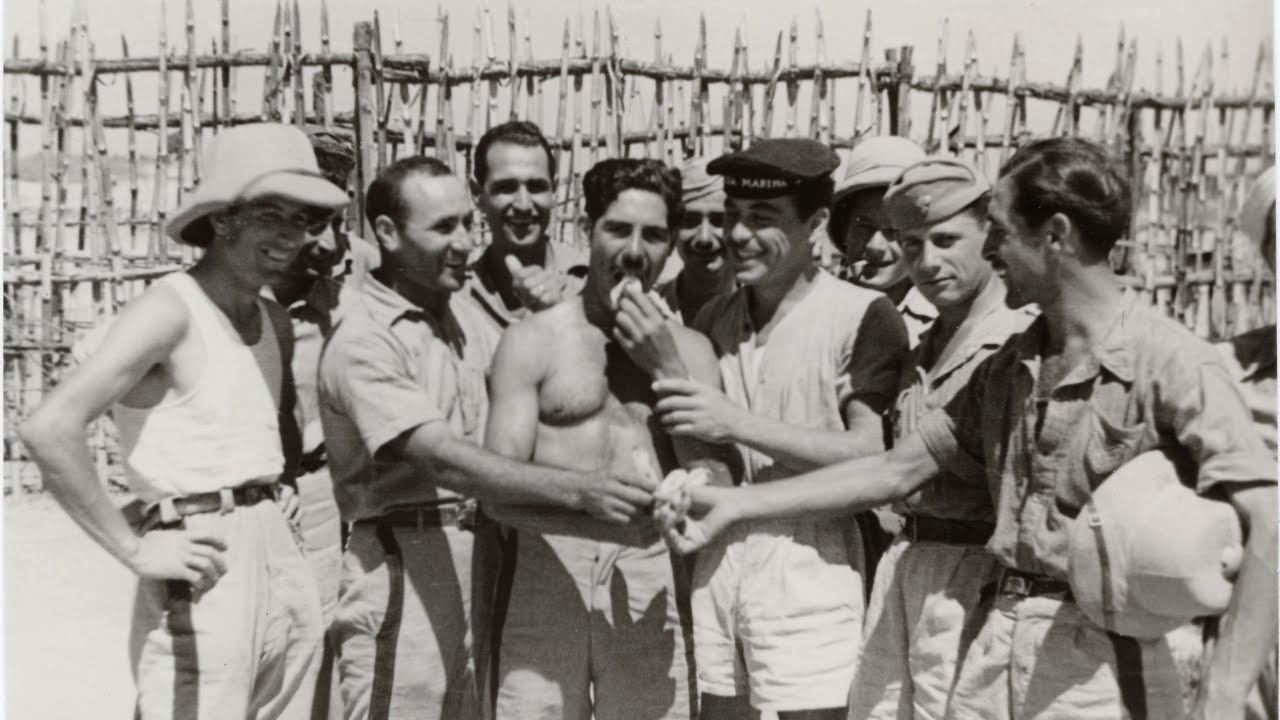
After months of survival rations, the Americans provided white bread, canned meat, coffee with sugar, and chocolate. The Liberty ships that carried them across the Atlantic were returning from delivering supplies to the European theater. Rather than sail back empty, they carried human cargo up to 30,000 PSWs per month by summer 1943.
The two-week voyage across the Atlantic provided the first systematic contradiction of fascist propaganda. The ships themselves were monuments to American productivity. Vessels mass-roduced at rates Italy could never achieve. Italian PS discovered that radar equipment, which they had seen only on advanced British warships, was standard on American cargo ships.
The ship’s mess provided daily shock. American sailors had ice cream machines, unlimited coffee, fresh bread, and meat. They discarded food that would have been treasured in Italy. This casual waste demonstrated resources beyond comprehension. As Italian PS disembarked at ports like Norfolk, Virginia, and on the West Coast, they entered a world that exceeded imagination.
The ports sprawled across thousands of acres with docks stretching for miles. Dozens of ships loaded and unloaded simultaneously. Electric cranes lifted loads that would require dozens of men in Italy. But most striking was the civilian prosperity. parking lots filled with workers automobiles.
In Italy, only the wealthy owned cars. Every building had electricity. Shops displayed goods that had vanished from Italian stores before the war. The prisoners traveled by passenger train, not cattle cars. They rode in coaches with cushioned seats, electric lights, and dining cars. The journey into America’s heartland revealed a nation of impossible wealth.
Every small town had electricity, automobiles, and shops full of goods. Factories ran three shifts with electric power. Even rural farms had tractors and electrical lines. Camp Heraford was designated exclusively for Italian prisoners, while other camps like Camp Hearn held primarily German PWs. The camp encompassed four compounds with barracks, mess halls, and infirmaries surrounded by barbed wire fences monitored by armed guards.
At its peak, it held 3,860 prisoners. The Heraford camp alone contained Italian PS, 2,580 men, making it one of the primary centers for Italian prisoners in Texas. The camps exceeded Italian military standards. Barracks had electric lights, hot showers, flush toilets, and heating. The hospitals contained equipment unavailable in Italy since before the war, including X-ray machines and modern surgical tools.
To the Italian prisoners, the camps were almost paradise. Although there were instances of mistreatment, especially toward theNS, they were kept in clean barracks, had hot showers, an abundance of food, and they could spend the money they saved from their work at the local PX. The food overwhelmed them. Three meals daily with meat, vegetables, bread, milk, and often dessert.
Special meals for holidays exceeded anything they had known even before the war. Kitchen workers reported throwing away more food daily than their families in Italy received weekly. Everything changed on September 8th, 1943 when Italy surrendered and signed an armistice with the Allies. Marshall Petro Bedoleio’s government switched sides, declaring war on Germany on October 13th.
After Italy surrendered, the prime minister instructed Italian PSWs to collaborate with the Allies. Beginning in February of 1944, the United States Army Service Corps offered the Italian PS in the United States the opportunity to join what came to be known as Italian Service Units. They could remain prisoners or volunteer for Italian service units, ISU, to work alongside Americans in non-combat roles.
The response was overwhelming. Of the 51,000 Italian PS being held in the United States at the time, over 45,000 joined the service units and were sent to places with a shortage of labor manpower across the United States. They signed pledges to assist against their former German allies and received privileges that transformed their experience.
Even though they were officially still classified as PWS, they nevertheless dawned uniforms that were differentiated only by a patch that read Italy that was worn on the left sleeve and stitched onto the standard garrison cap. They also received a monthly stipend of $24 of which only one/3 was paid in cash. The rest was issued as script to be used on the base where they were being held to pay for various supplies and personal items.
In California, where the war was palpable through to the end of 1945 because of the intensity of fighting in the Pacific, Italian PS working in support of the war effort were actually received most enthusiastically. The state’s large Italian-American population established since the gold rush era as fishermen, farmers, and wine makers embraced the PS.
The most amazing story being that of the Italian PS stationed on Angel Island who held regular dances in a hall in San Francisco that they rented with their own money. Using their earnings, they organized Saturday night dances that became major social events. American women attended, chaperoned, but eager to meet the Italian soldiers.
Italian prisoners of war worked in California’s agricultural fields, witnessing farming on a scale that defied comprehension. Single farms were larger than Italian provinces. Mechanical harvesters did the work of hundreds of men. Italian ISU members became essential contributors to the American war effort.
They loaded ships for D-Day, harvested crops that would have rotted without their labor, and maintained military equipment with expertise gained in North Africa. The Italian service units accounted for over 90 million man days of labor in the United States from 1943 to 1945. In financial costs, the program saved the United States government an estimated $230 million.
At the Brooklyn Army Terminal, Italian prisoners of war loaded supplies for the liberation of Europe. They worked with enthusiasm, knowing every shipment brought Italy closer to freedom from German occupation. In agricultural areas, they saved harvests crucial to feeding both America and its allies. By June 1943, over 14,500 Italian PS resided in camps throughout the United States.
As the program expanded after Italy’s surrender, Italian workers became indispensable in many sectors. Love flourished despite regulations. Italian prisoners of war met American women at church services, approved social events, and through work. In Ogden, Utah, a local church held chaperoned dances each weekend for the PWS, and Italian-American families could visit PS on Sundays.
These relationships faced obstacles. Military regulations prohibited marriages between prisoners of war and American citizens. Yet romance found ways. Sympathetic priests performed ceremonies. Couples maintained relationships through letters. And many women followed their Italian boyfriends to Italy after repatriation, marrying there before returning to America as wives of legal immigrants.
The Italian-American community played a crucial role in areas with large Italian-American populations. PWS found surrogate families who invited them for Sunday dinners, helped them write letters home, and maintained connections that lasted decades after the war. Christmas 1943 provided profound emotional impact.
American churches and civic organizations sent packages to camps containing cigarettes, chocolate, and toiletries. Luxuries even for American civilians. Local communities organized dinners and celebrations. At Camp Heraford, local churches performed Italian Christmas carols. Catholic churches held midnight mass in Latin andItalian.
The Christmas feast included turkey, ham, multiple side dishes, and desserts. abundance that Italians hadn’t seen since before World War I. This kindness toward enemies shattered the last remnants of fascist propaganda about American weakness. Italian PWS wrote home describing American generosity that only a nation certain of victory could show.
By 1944, thousands of Italian PS enrolled in educational programs. They studied English, American history, mathematics, and vocational skills. Universities provided correspondence courses. The camps showed Hollywood films and published newspapers that evolved from simple news sheets to sophisticated publications discussing democracy and postwar reconstruction.
Italian PWS built theaters, formed orchestras, and created art that remains in many locations today. At various camps, they constructed elaborate fountains, painted murals, and built chapels that still draw visitors. These weren’t crude prisoner crafts, but professional quality work that demonstrated Italian artistic tradition.
When news of the June 6th, 1944 Normandy invasion reached the camps, Italian PS celebrated wildly. These were their former enemies landing in France, but also the liberators who would free Italy from German occupation. Italian PS worked extra shifts loading supplies, painting messages on boxes for the liberation of Rome, death to the Nazis.
When Rome fell on June 4th, 1944, Italian PS and Italian Americans held joint celebrations across America. Former enemies had become allies in the fight against Nazi Germany. At Camp Heraford, prisoners and local residents held a victory mass that drew thousands. Throughout captivity, Italian PS experienced genuine American kindness. When prisoners received news of family deaths from bombing in Italy, American guards and commanders attended memorial services.
Local families adopted prisoners who had lost everything, ensuring they weren’t alone during holidays. Medical treatment particularly affected prisoners. Italian doctors worked alongside American medical staff, learning techniques and using equipment unavailable in Italy for years. Prisoners received operations and treatments that would have been available only to the wealthy in Italy.
The separation between German and Italian prisoners became more pronounced after Italy’s surrender. While German PWs often maintained Nazi ideology, Italians embraced their new status as co-belligerants, working enthusiastically for Allied victory. In March 1944, the US military sent 1,800 ISU members to Boston.
First housed at Camp McKay in South Boston, the prisoners received frosty treatment by locals. Boston’s Italian-American community initially viewed PWs with suspicion, fearing they would damage the community’s reputation as loyal Americans. But transformation came quickly. Italian PWs proved themselves industrious workers at the Boston port of embarcation.
They sang in church choirs, cooked for festivals, and introduced authentic Italian cuisine to second generation Italian-Americans who had never tasted real Italian food. As a result of rising tensions with the South Boston community, 1,300 of the ISU members transferred to Pedex Island in Boston Harbor a few months later. On the island, they enjoyed more freedom with trustees allowed Sunday boat trips into Boston’s North End, where they often dined with Italian-American families.
Italian PWS witnessed American industrial and agricultural production that defied comprehension. In California’s Central Valley, they saw single farms producing more than entire Italian provinces. Mechanical harvesters processed in hours what would take weeks in Italy. They watched as perfect fruit was discarded for minor blemishes.
Entire crops sometimes plowed under to maintain prices. Waste that would have prevented starvation in Italy, but here demonstrated unlimited production capacity. The casual attitude toward abundance stunned them most. Workers threw away halfeaten lunches, left lights burning in empty rooms, and drove automobiles to work.
All unthinkable in wartime Italy, where families survived on meager rations. Men were put to work in the fields or on fishing boats earning $8 a month. Even this modest wage seemed generous to men who had nothing, and they saved carefully to send money home after the war. Italian prisoners of war left permanent marks on American culture.
They introduced botchi ball to communities that still play today. They taught Americans to make authentic pasta and pizza, helping launch what would become a multi-billion dollar industry. Their decorative work, fountains, murals, and chapels remains in dozens of locations. Camp newspapers published by PS showed remarkable transformation.
Articles evolved from news about Italy to discussions of democracy, American farming techniques, and plans for postwar reconstruction. These publications circulated among camps spreading ideas about democratic governance and modern methods. On July16th, 1944, the 38th and 40th Italian Quartermaster Services Companies arrived at Rock Island Arsenal by train from Pine Camp, New York.
They performed maintenance and support work that proved so valuable that commanders requested delays in repatriation after the war ended. At agricultural sites, Italian PWS demonstrated expertise from generations of farming tradition. They introduced techniques that improved American agriculture. Their work in caneries, shipyards, and military depots freed thousands of Americans for combat duty.
The volunteers in the Italian service units also freed up American soldiers who would have performed supporting roles to serve in combat. Due to the assistance of the Italian service units, fewer American men had to be drafted. The scale of the Italian P experience in America. At its peak in May 1945, a total of 425,871 PS were held in the US.
371,683 Germans, 50,273 Italians, and 3,915 Japanese. The Italian PS numbered 51,000 and were placed in the 21 camps in 18 states. Labor contribution 90 million man days of labor. $230 million saved in labor costs. Thousands of Americans freed for combat duty. Critical harvests saved from rotting.
Integration success 45,000 joined Italian service units. Less than 1% attempted escape. Thousands maintained correspondence with American families postwar. Many returned as legal immigrants. Repatriation began in late 1945 but proceeded slowly. America needed their labor for transition to peace time. Many Italian PS didn’t want to leave.
They had found friendship and opportunity in America while Italy remained destroyed and occupied. When departures began, entire communities turned out to say goodbye. At Camp Heraford and other camps, local newspapers wrote about losing friends, not prisoners. Relationships formed during captivity, both romantic and platonic, faced separation.
Between December 1945 and July 1946, Italian PSWs returned to Italy carrying knowledge of American democracy, agricultural techniques, and industrial methods. They became inadvertent architects of Italy’s post-war reconstruction, implementing American approaches learned during captivity. As promised, many former PWs returned to America as legal immigrants.
Sponsored by employers who valued their skills, families they had befriended or women they had married, thousands made new lives in America. These immigrants succeeded remarkably. They founded businesses, particularly in food industries and import export trade between Italy and America. They maintained connections between the nations that facilitated post-war recovery and trade.
Former PWs and their descendants achieved prominence in American society. They became judges, business leaders, military officers, and community leaders. Their children, raised with both Italian and American heritage, bridged cultures in unique ways. Today, physical reminders of the Italian P experience survive across America.
At Camp Heraford, a small chapel built by prisoners in 1945 still stands. Constructed to honor five men who died at the camp, it features concrete made to look like marble and serves as a pilgrimage site for descendants. Boche courts from California to Massachusetts trace origins to Italian PWs who introduced the game.
Italian festivals in unlikely places like Texas and Utah celebrate the P legacy. Recipes taught by P cooks remain family traditions. But the true monuments are the families and communities transformed by this experience. Business relationships established during the 1940s continue through third and fourth generations.
Sister city relationships between American and Italian towns originated from P connections. Historians recognize the Italian P experience as remarkably successful in transforming enemies into allies. Unlike traditional re-education through propaganda, Italian PS were converted through experience, witnessing American democracy and prosperity firsthand.
Several factors contributed to this success. Italy’s surrender in 1943 changed P status from enemy to co-belligerant. Italian-American communities provided cultural bridges. Catholic faith shared by many Italians and Americans created bonds. Italy’s pre-war economic struggles made PS receptive to alternatives.
American abundance and kindness contradicted fascist propaganda. The contrast with German PS is instructive. While Germans often maintained Nazi ideology despite similar treatment, Italians almost universally embraced American values. This difference reflected cultural factors and the timing of Italy’s surrender.
The Italian P experience influenced both nations profoundly. For America, it demonstrated the power of kindness and prosperity in winning hearts and minds. For Italy, returning PSWs brought knowledge that contributed to post-war democratic development and economic recovery. Former PWs helped establish business connections between Italy and America that facilitated trade and investment.
They introduced Americanagricultural and industrial techniques that modernized Italian production. Most importantly, they carried memories of democracy functioning successfully, providing models for Italy’s post-war government. The program succeeded because it relied on demonstration rather than indoctrination. Italian PS saw American society functioning effectively while treating enemies with dignity.
They witnessed production capacity that made victory inevitable. They experienced living standards that exposed fascist promises as fantasies. Starting in the 1970s, former Italian PS organized reunions in America. These gatherings celebrated transformation and friendship rather than captivity. The 1988 reunion at Camp Heraford drew hundreds of former PWs and thousands of Americans who had known them.
Veterans spoke of gratitude for American kindness, of lives transformed by captivity, of enemies who became family. Their testimonies emphasized that their imprisonment had been fortunate, opening doors to democracy, prosperity, and friendship. At these reunions, elderly men who had arrived as Mussolini soldiers embraced American guards who had become lifelong friends.
Their grandchildren, American and Italian, played together, living proof of reconciliation. Why did Italian PWS call American camps almost paradise? Not because captivity was pleasant, but because it revealed possibilities they never imagined. They discovered that prosperity came from freedom rather than conquest, that diversity created strength rather than weakness, that democracy functioned better than dictatorship.
They witnessed ordinary Americans living better than Italian aristocracy. They saw workers owning automobiles, farms using machinery, factories producing abundance. They experienced kindness from enemies that their own government never showed them. The paradise was relative compared to years of war, starvation, and propaganda lies.
American camps offered food, safety, and dignity. Compared to what awaited in bombed occupied Italy, America represented hope and opportunity. The Italian P experience enriched American culture permanently. Pizza, now a multi-billion dollar industry, was popularized partly by P cooks taught Americans authentic preparation.
Espresso culture decades before Starbucks was introduced by Italian prisoners to communities that had never tasted real coffee. In small towns across America, Italian festivals celebrate connections born from the P experience. In Heraford, Texas, the annual P reunion became a community tradition.
In California’s Central Valley, wineries founded by former PWs or their descendants produce wines using techniques brought from Italy. The linguistic impact was significant. Thousands of Americans learned Italian from PWS, creating a generation of Italian speakers who would facilitate post-war business and cultural exchange. Italian words entered local vocabularies, particularly in food and agriculture.
Beyond the immediate $230 million in labor value, Italian PWS contributed to long-term economic connections. Former prisoners who became American citizens or maintained business relationships facilitated billions in trade between Italy and America. The agricultural techniques they learned and implemented in Italy helped that nation’s postwar agricultural recovery.
The industrial methods they observed influenced Italian manufacturing, contributing to the Italian miracle of the 1950s and 1960s. American businesses benefited from connections with former PWs who understood both cultures. Import export firms, food companies, and manufacturing partnerships flourished through relationships begun in prison camps.
Studies of former Italian PS revealed remarkable psychological outcomes. Unlike many P populations who suffered lasting trauma, Italian prisoners in America showed lower rates of depression and PTSD than Italian soldiers who weren’t captured. Psychologists attribute this to several factors.
Excellent treatment exceeding expectations, meaningful work providing purpose, social integration, reducing isolation, educational opportunities offering hope, and the transformation from enemy to ally status after Italy’s surrender. The psychological impact extended to families. Children of former PWs often reported that their fathers spoke positively of their captivity, unusual for war experiences.
This positive framework influenced family dynamics and international perspectives for generations. The story of Italian PS in America demonstrates war’s capacity for unexpected transformation. Men who arrived as Mussolini soldiers left as democracy’s advocates. Enemies became friends. Prisoners became partners and many ultimately became Americans.
Through simple acts, sharing food, providing medical care, allowing religious worship, enabling correspondence with families, America converted adversaries more effectively than any propaganda could achieve. The Italian PS witnessed American society at its best and wanted that prosperity andfreedom for their own nation. Their contribution went beyond labor.
They enriched American culture, strengthened Italian-American communities, and built bridges between nations that endure today. Their descendants, whether in Italy or America, embody the possibility of reconciliation and friendship after conflict. The Italian PS found their quasi paradiso not in the camps themselves but in the revelation of what society could achieve through democracy and freedom.
They returned to Italy carrying seeds of transformation that would help build a democratic nation from fascism’s ruins. In the end, 51,000 Italian soldiers captured in North Africa discovered in American captivity what Mussolini’s empire could never provide. dignity, opportunity, and hope. They called it paradise, not because it was perfect, but because it showed them perfection was possible.
Through their transformation, enemies became family, and two nations found friendship that endures across generations. Their legacy reminds us that even in war’s darkest moments, humanity can prevail. that kindness can conquer where weapons cannot, that showing enemies a better way may transform them into friends.
The Italian PS who found paradise in America proved that reconciliation is possible, that democracy’s example is powerful, and that treating enemies with dignity can yield victory more lasting than any battlefield triumph. The camps are mostly gone now, returned to farmland, or developed into suburbs. But in Heraford, Texas, a small chapel stands.
In California, botchi courts echo with Italian voices. In countless American communities, families trace their roots to an Italian soldier who found paradise in captivity and chose to stay. They came as warriors of a failed empire. They left as builders of a democratic future. They arrived as prisoners.
They discovered paradise. And in that discovery, two nations found a friendship that neither war nor time could break.
