June 6th, 1944. Normandy. On the bloodiest stretch of the bloodiest beach, everything had gone wrong. The 29th Infantry, green, untested, was promised a swift victory. What they got was chaos, crashing waves, relentless gunfire, and death all around. But in the midst of it all, one man refused to break.
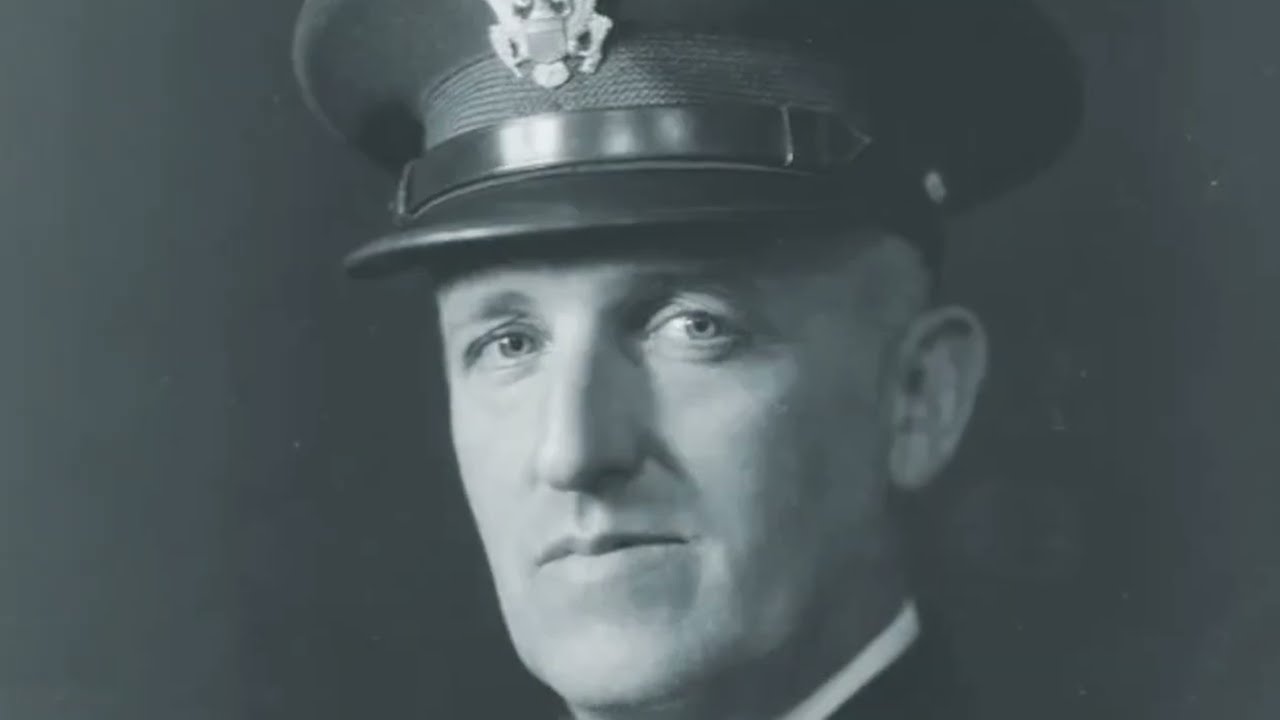
Brigadier General Norman Dutch Cota stepped into the fire, not behind his men, but beside them, and turned a massacre into momentum. This is the story of courage, catastrophe, and the battle that cracked open Hitler’s fortress Europe right here on Omaha Beach. By the beginning of 1944, the Allies were in need of a new strategy.
In Italy, what Winston Churchill claimed as Europe’s soft underbelly was proving anything but with Allied advances stalled along the infamous Gustav line. On the Eastern front, the Soviets continued to push German forces back westwards, but progress was slowing and the time had come for Churchill and Roosevelt to give Stalin what he’d been asking for for so long, a second front.
Plans for just such an invasion have been made as early as November 1942, but the launching of such an operation have been unrealistic up until now. Months of planning were needed for what would ultimately become the largest amphibious assault in history. To begin, the Allies first needed to choose where specifically that invasion would occur.
The logical answer was right here in the Pad Calala, as it was the shortest point across the English Channel. The Allies knew, however, that Hitler knew it too, and so they decided to use this to their advantage. Known as Operation Fortitude, phantom armies, fake radio messages, and double agents were all employed in a massive deception strategy that convinced German high command that the attack would come either at Calala or perhaps even in Norway.
The true target, though, was right here in Normandy along this stretch of the vaunted Atlantic Wall. normally had been chosen as it lay within easy reach of air cover and would allow for a broad front attack towards Paris. However, the first and most formidable objective will be to secure the beaches for a push in land.
To accomplish that task, five locations were selected for the landings. The Canadians were assigned the beach designated Juno. To their left and right, the British would assault Gold and Sword. To the west, the Americans were given Utah, which when taken would put them within 40 mi of Sherborg, a vital deep water port. Between Utah and gold was found the second American beach and the most formidable of all, Omaha.
The primary reason for Omaha’s difficulty were these hills or bluffs lining most of the frontage of the 4-m long beach and offering the Germans ample means to rain fire down onto the attackers. Although not as heavily fortified as the area around Calala, the German defenses in the area was still formidable. Pillboxes, machine gun nests, beach obstacles, barbed wire, and mines all lined the shore and inland paths.
Taking the bluffs and neutralizing the German defenses would not be an easy task. But there was a means of doing so. Along Omaha, four natural gullies, features known as drawers, offered breaks in the bluff and quick access to move men and vehicles off the beach. For our story, we’ll be focusing right here on the D1 draw near the village of Vil Shumere.
With its wide road and good inland access, it was considered the most important objective of the entire landing and therefore posed the greatest challenge. Let’s have a closer look. The Vivville draw was guarded by three major groups of German defenses known as Vidashan nests or WN’s, each with its own series of fortifications and trenches.
WN71 was positioned here to the east side of the drawer and contained several bunkers for machine guns and multiple mortar pits that could fire not only onto the beach but also along the road leading towards Vville itself. Nestled amongst these houses was WN72, the most formidable of the three. A bunker built out of the shell of an old hotel housed an 88mm Pack 43 and was guarded by two 9- ft tall, 6′ wide reinforced concrete walls that stretched across the road, blocking vehicles from moving in land.
Just to the west, another bunker contained a 50 mm gun mounted on a swivel, which could fire both to the east and west. Roughly 200 yards up the coast was WN73 with a further 75mm anti-tank gun located just here along with several mortar pits and machine guns. All were cighted to fire inard along the beach. This gave them more protection from naval fire and gave the attackers less place to hide.
Trenches and additional machine gun nest was scattered throughout the entire area. Mines dotted the sloping cliffs. barb wire ran along the seaw wall and various anti-tank obstacles and mines were scattered between the seaw wall and 300 yd of flat sandy beach up to the low water mark.
In short, the Verville defenses will be a very tough nut to crack. The task of securing this stretchof Omaha fell to the men of the unblooded 29th Infantry Division. Specifically, the first battalion of the 116th Infantry Regiment was assigned to the Beerville Draw. Companies of between 120 to 150 men each would hit the beach in multiple waves, advancing across this very ground in full view of the enemy before clearing the closest defenses, pushing in land up the Vville draw and establishing a foothold for supporting troops to come ashore. Company A would
be in the first wave, landing on this sector designated dog green at around 6:30 a.m. to their left. Company G of the second battalion would land in support here on Dog White, while Company C of the Second Ranger Battalion, consisting of 65 men, would land just here in Charlie sector. At 7:00 a.m., the second wave would land with companies B, C, and D, reinforcing dog green along with fifth rangers.
Companies A and B of the second Rangers would land between dog green and dog white. Armor will be sent in with the first wave, including the new amphibious DD tanks, as well as engineers to clear the beach obstacles. The beach and the draw itself were to be secure by 9:00 a.m. Those initial plans were ultimately approved, but not everyone was satisfied with them.
One man in particular was Brigadier General Norman Cota. Born in Chelsea, Massachusetts on the 30th of May 1893, Dutch Cota had graduated West Point in the summer of 1917 and had steadily risen through the ranks to become chief of staff for the first infantry division by June 1942. During operations torch and husky, Cota developed a reputation as an expert in amphibious assaults, favoring tactical surprise and pre-dawn landings to minimize casualties.
While Cota was not alone in his thinking, he was overruled as the landings would be preceded by naval bombardment and aerial bombing to soften up the German defenses. On the afternoon of the 5th of June, Cota, now assistant commander of the 29th Division, addressed his staff. You’re going to find confusion.
The landing craft aren’t going to be in on schedule, and people are going to be landed in the wrong place. Some won’t be landed at all. We must improvise, carry on, not lose our heads. On the evening of the 5th of June 1944, a massive armada, over 6,000 ships, set sail across the English Channel to commence Operation Neptune, the code name for the naval portion of the invasion.
Battleships USS Texas and Arkansas, along with three cruisers and over a dozen destroyers, were assigned to Omaha. Over 450 B24 Liberators, would conduct bombing raids ahead of the main landings. General Omar Bradley promised the men that the bombardment would make short work of the German positions and referred to it as the greatest show on earth.
Despite his confidence, most of those on route were in little doubt of what was to come. Amongst them were 31 men in Company A 116th, all hailing from the small town of Bedford, Virginia, who were promptly dubbed the Bedford Boys. Two of them, 24-year-old twin brothers Ray and Roy Stevens, went to board separate transports.
As Ray offered to shake his brother’s hand, Roy declined, telling him he’d do so on the beach. Right here off the coast of Omaha, at approximately 550 a.m., the opening salvos began. Although both the Texas and Arkansas fired over 700 rounds each, the naval guns proved ineffective against the majority of the beach defenses.
To make matters worse, overcast skies coupled with smoke and dust from the naval fire caused the supporting bombers to hold their payloads longer to avoid hitting their own men who by now were making their way to shore. When those bombs were dropped, most fell well behind the German positions. On this, Lieutenant Colonel Herbert Hicks Jr.
would later report the air might as well have stayed home in bed for all the good their bombing concentration did. For those soaking and seasick men in the leading landing craft, the terrifying reality had set in. Now, instead of facing a stunned and significantly reduced enemy force, the first wave would had to deal with the full might of an alert and prepared German defense.
The plan continued to go ary as the leading waves approached the beach. Smoke from grass fires caused by the bombardment, as well as strong currents in the choppy seas made it difficult for the landing craft to reach their designated zones. When within several hundred yards of the coast, enemy fire erupted from the smoke shrouded bluffs to their front, it was clear to all that it would be an extremely tough fight.
While Company A and the Rangers were able to mostly reach their intended locations, company G drifted too far to the east, landing closer to dog red sector. The result being that Company A found itself practically alone in front of formidable German defenses around the D1 draw. Of the six landing craft that brought Company A to shore, one founded at sea, one was knocked out by artillery, and the remainder grounded not on the beach, but on a sandbarroughly 50 yard from shore.
The design of the LCA’s or landing craft assault, not the Higgins boat, as seen further along the beach, meant that the men could only exit single file. As men began to disembark, German machine guns and artillery hammered into them. Many were cut down before they even left the craft. Those that could now had to wade through water neck deep in some parts just to make it ashore.
Some so heavily laden with equipment were dragged under and never resurfaced. All the while the fire from the cliffs poured into the men below, cutting them to shreds. Men struggled ashore, some pushing the wounded through the water to try and save them. The few who did make it to the sand sought shelter where they could.
The losses of Company A were staggering, especially to officers and NCOs’s. Within just 15 minutes of landing, the unit had practically ceased to exist. The armor had fared a little better. Most of the amphibious DD tanks launched too far out in rough seas would be swamped within moments and still today lie at the bottom of the English Channel.
Other tanks were fured closer in and immediately came under fire from the German AT guns with 14 being knocked out in quick succession. Some men attempted to use the tanks as cover, but they had little room to maneuver while rolling over the corpses of the infantry to stay alive. Many became trapped behind obstacles in the surf.
The engineers who had landed were given 27 minutes to clear 16 passages for the tanks to move through. But exposed and unprotected, they became easy prey for the marksmen and machine guns. And their work was further hindered by the men desperately sheltering behind the obstacles they had to destroy. Only one passage was cleared and around half of the engineers at Dog Green became casualties.
As the dead continued to pile up, the situation was dire. About 30 minutes after the initial landings, the second wave began their approach. As with the first, the rough seas and obstructed views caused several craft to miss their intended sectors. Company C landed on dog whites by mistake and found themselves isolated.
Companies B and D were scattered from dog green to red. Those that managed to join what remained of A Company quickly became bogged down with them. Some men of B company managed to join the Rangers who landed on Charlie. Together they began to scale this cliff to launch an assault on WN73 and take the pressure off Dog Green.
Colonel Max Schneider of the Fifth Rangers shifted his forces to Dog White when he saw how untenable Dog Green was. The smoke that had created havoc earlier on now managed to obscure the Rangers from German fire, and they joined Company C almost in their entirety. Just behind the Rangers, at around 7:30 a.m.
, can none other than General Cota himself, whose appearance would be a turning point. Cota almost didn’t get the chance, however, for on his way in, his craft struck a mine-laden obstacle. Though lucky for him, the mine rolled off into the sea without detonating. His craft stopped roughly 50 yards offshore just here, meaning Cota and his staff, affectionately called the Bastard Brigade, had to move through kneedeep water the rest of the way to the tenuous protection found just here at the seaw wall.
As he disembarked, three men in his craft were killed instantly from gunfire. Cota made his way ashore to assess the situation. To him, it was clear that everything that could go wrong had gone wrong. Men were still hunkering down by the seaw wall, refusing to move. Cota knew that action was needed now, otherwise the men would simply stay put and die.
In an extraordinary display of bravery, he began calmly walking up and down the beach, oblivious to the gunfire around him, attempting to rally his troops. “Gentlemen,” he said, “we’re being killed on the beaches. Let us go in land and be killed.” His confidence was exactly what the men needed. Sergeant Francis Hooser later exclaimed, “I guess all of us figured out that if he could go wandering around like that, we could, too.
” Cota soon found Colonel Schneider and asked him what unit he was in. When Schneider replied, “Rangers,” Cota famously remarked, “well, if you’re Rangers, then get up there and lead the way.” The phrase stuck, “Rangers, lead the way,” has been their official motto ever since. Let’s zoom out to assess the current situation.
Across much of the length of Omaha Beach, battered infantry were pinned under the unrelenting barrage of German mortar, artillery, and small arms fire with men huddled beneath shallow sea walls or hiding behind beach obstacles as the incoming tide swamped their comrades too badly injured to move.
Tanks that hadn’t been destroyed or abandoned had retreated to the surf to have more room to dodge anti-tank shells. Around Verville, the attack by the Rangers and WN73 was now though in progress, but it was slow going as men scaled this break in the cliffs. From a vantage point, a German officercould see at least 10 burning tanks and the men crowding the seaw wall.
To the Germans, it appeared that the American attack had stalled and was about to be hurled back into the sea. Nevertheless, reinforcements had been requested, but due to the situation in the rest of Normandy, none would arrive. If a breakout was to occur, it had to be now. While the Vville drawer seemed the most obvious route off the beach, it was not the only one.
As we can see, this small drawer running obliquely up the bluffs could allow the men to ascend the cliffs and flank the German defenses, offering a in the armor of the Atlantic Wall. It will be here that the American breakout would commence. Company C of the 116th would be the ones to lead the push off the beach. At long last, one man managed to blast a hole in the barb wire covering the top of the seaw wall with a Bangalore torpedo.
The first man through the brereech was cut down by German fire. Cota with pistol in hand jumped through next and the rest of the men followed. A mortar landed nearby, killing two men and throwing the general to the ground, but he was soon back on his feet to continue the advance. The leading men made their way across this road, which runs parallel to the beach, to the base of the bluffs.
Using a communications trench to avoid the multitude of mines, they proceeded in single file before reaching the draw. After taking a few moments to recover, the men soon reached the top, coming under machine gun fire from WN70 guarding the area. Cota led the charge himself, forcing the enemy back, and in doing so, opened a route off the beach.
As Cota made his climb, Schneijider’s fifth rangers made their own breaches and scaled the drawers here, 100 yards to Cota’s right. Additionally, companies A and B of the Second Rangers, who had landed between Dog Green and White, had fought their own way up, losing half their number in the process. The combined forces quickly captured WN70, which had already been heavily damaged by naval fire.
The tide was now turning in the Americ’s favor. This vital location acted like a magnet for all troops in the vicinity as stragglers from various units flooded the brereech. By 9:00 a.m. around 600 Americans were on the cliffs east of the Vville Draw, spotting the church steeple in the distance, they headed in this direction towards the village, which held the key to unlocking the Vville Draw.
Cota himself had pushed so far ahead of his men, some of whom later recalled finding him near the northeastern road, twirling his pistol, waiting for them. Where the hell have you boys been? He asked. As he led the 116th down this road, the Rangers pushed south to clear the enemy outside the village.
As they entered the hedros around here, they were stopped by a series of machine gun nests holding a line of resistance. Unable to find a way through without heavy weapons, the Rangers pulled back and established holding positions in case of a German counterattack. Cota though along this road advanced into Vville itself around noon taking this exact route encountering little resistance along the way.
But the same time naval fire from the USS Texas and three destroyers were targeting the remaining Beerville defenses with direction from spotters on the beach silencing many of the remaining German guns. By this point, the Rangers from Charlie and their company B companions had finally captured WN73 and had been slowly eradicating Germans from the cliffs west of the draw.
The majority of the 116th began pushing west themselves while Cota took five men towards the draw. Moving along this very road, they came under fire from this bunker, dug into the cliffs, protecting the draw. The Americans returned fire, taking out five of their attackers, and the remaining Germans quickly surrendered. By early afternoon, the last vestigages of resistance around the jaw had dissipated as the defenders, outflanked and outnumbered, saw that the situation was lost and withdrew as best they could, leaving behind thousands of spent
cartridge cases around smoking machine guns, which for hours had wrought havoc on the men trapped on the beach below. All that remained now was the concrete wall blocking the road. Cota and his men followed PS through a minefield at the base of the wall and headed back to the beach.
With the use of Bangalores, TNT, and a bulldozer, the final obstacle of the Verville Draw came down in a rain of smoke and concrete, bringing an end to the day’s carnage. By 400 p.m., 9 hours after originally intended, the Verville draw on Omaha Beach was officially secure. The losses sustained on Omaha alone on the 6th of June 1944 were horrific, eclipsing those of the other four beaches.
All told, between 2,400 and 2,700 men became casualties with at least 770 killed, though the exact number today remains uncertain. The heaviest casualties that day were suffered by Company A 116th, who had been decimated in the face of witheringfire from the Verville draw. Amongst the dead were 20 members of the Bedford boys, the hardest hit of any American town on D-Day, including Ray Stevens, whose brother’s promise of a handshake on the beach remained unfulfilled.
Despite the bloodshed, the sacrifice by those who landed on Omaha and all the Normandy beaches would not be in vain. By the end of the day, the Atlantic War had been defeated. More than 100,000 men have been put ashore and the liberation of Normandy, France, and Europe could begin. For the men of the 29th, D-Day was only the beginning as the division carried out more bloody operations over the next 9 months.
The war would go on for General Cota, too. He was awarded the Distinguished Service Cross for his actions in inspiring his men on the beaches. Kota continued to lead throughout the Normandy campaign until August 1944 when he was transferred to the 28th division just in time for the liberation of Paris. Kota’s shining star would eventually lose some of its luster when his division sustained heavy losses in the Herkan forest.
Dutch Cota retired from the military in 1946 as a major general and passed away in Witchita, Kansas on the 4th of October 1971, aged 78. While Cotto’s role on D-Day cannot be understated. He never took the whole credit. For him, it was the men in his charge that were the real heroes. He later wrote, “Believe me, they were the only reason that enabled an old croc like myself to shake fear loose and roll on.
” Today, just a few miles along this now peaceful beach, can be found this, the Normandy American Cemetery, which today is the final resting place of more than 9,000 fallen US servicemen, including many who perished that morning on Omaha, who would never know that their sacrifice was instrumental to the liberation of Europe. Thanks for watching.
