Given that we’re in the era of revisionism, especially about World War II, I think it’s wise if we just review what Pearl Harbor was about. We’ve had the 84th anniversary of the surprise attack at 7:00 in the morning on December 7th, 1941. The last four months of 39, all of 40, most of 41. The United States had watched the Germans absorb most of Western Europe and the Balkans and had been in Russia.
Meanwhile, the Japanese invaded China a second time in 1937, and they had half of what is now China under Japanese control. More importantly, what is now Indonesia, then called the Dutch East Indies, and the Japanese wanted to absorb those. Don’t believe a lot of the revisionism that has occurred.
The United States did not provoke Japan. Japan provoked the United States by attacking at a time of peace. Hello, this is Victor Davis Hansen for the Daily Signal. This week we have had the 84th anniversary of the surprise attack at 7 in the morning on December 7th, 1941. And then given that we’re in the era of revisionism, especially about World War II, I think it’s wise if we just review what Pearl Harbor was about.
Remember, the United States was not at war. The war had broken out in Europe on September 1st, 1939. So all of the last four months of 39, all of 40 and most of 41, we’re talking almost 2 and a half years, the United States had watched the Germans uh absorb most of Western Europe and the Balkans and had been in Russia.
And at the time of the Pearl Harbor attack, they were at the gates of Moscow, literally at the first subway station. So it seemed that they would take Russia. Meanwhile, the Japanese had done two things. They had invaded China again a second time in 1937, and they had half of what is now China under Japanese control in addition to South and North what is now South and North Korea.
And remember that the European colonial powers, the Netherlands and France had ceased to exist as independent countries. So their colonial possessions in the Pacific, specifically the bread basket of Asia in the Meong Delta of Southeast Asia, Cambodia, Thailand, Laos, Vietnam, were no longer under independent French control. And the Japanese had absorbed them.
But more importantly, what is now Indonesia, then called the Dutch East Indies, the Dutch had control of these islands. They were very rich in oil. The Shell, Dutch Shell Oil Company had substantial oil wells on there and the Japanese wanted to absorb those. It was that context that they attacked us. We didn’t attack them.
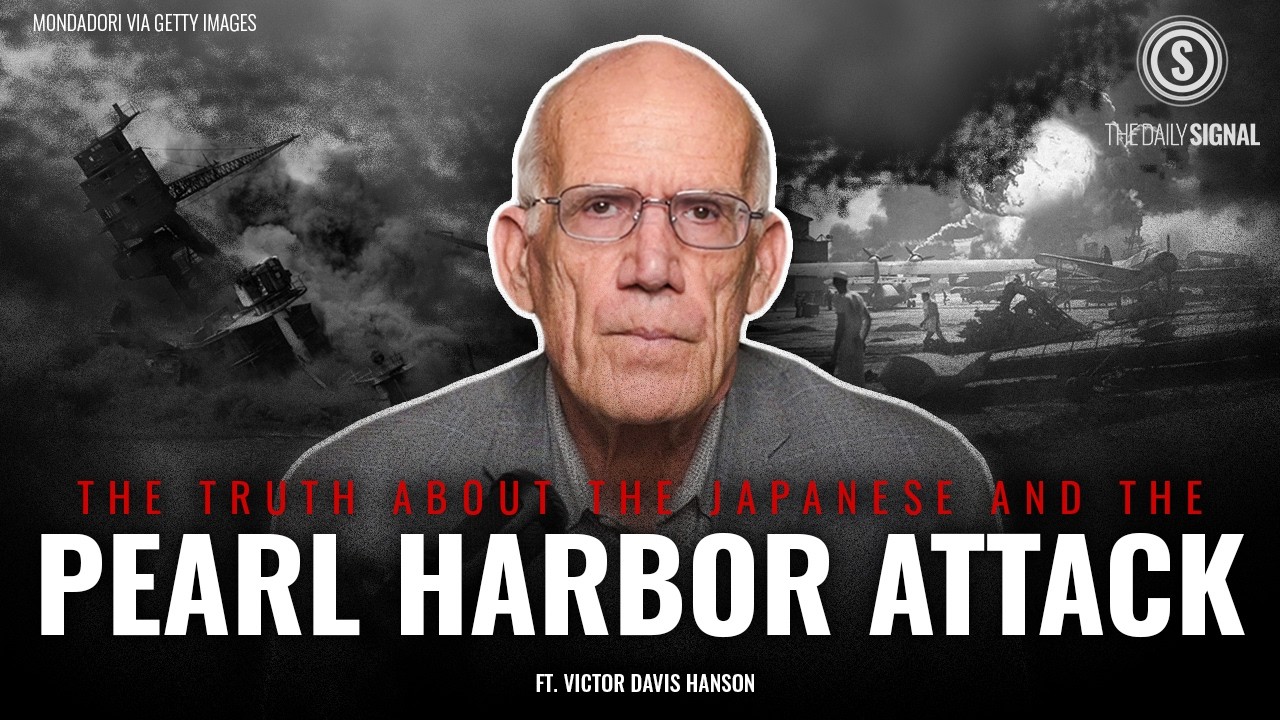
We knew that war was coming. We wanted to deter them by beefing up the Philippines and moving the headquarters of the Seventh Fleet from San Diego to Pearl Harbor, which Franklin Roosevelt had done. Why did they attack? They said that they did not want to attack. They were in the process of negotiating uh a peace settlement.
They said that we had cut off their oil uh exports. And we had because we had no other mechanism to convince them to get out of China. It was not their territory to get out of Korea to get out of Southeast Asia and to not absorb u the Dutch East India. They had refused on all of those accounts and said yet we will find a peaceful solution as they planned uh the attack.
The attack happened at 7:00 in the morning deliberately on a Sunday morning when people were either at church or still asleep from Saturday night partying and they came out of the rising sun, two waves uh and they destroyed four battleships and injured or I don’t want to say injured, they were inanimate objects, but they disabled four that sunk to the shallow bottom of Pearl Harbor.
Uh the three carriers uh the Saratoga the Lexington and the uh Enterprise were not there. That was a a gift because had they been, we would have had no naval air power in the Pacific. The other thing to remember about this attack, they did not order a third strike. Had they done that, they could have wiped out the oil refinery tanks, uh aviation fuel, and naval fuel for a year.
They did not hit the machine repair shops. and uh they didn’t mop up and completely destroy all of the uh aircraft or ships had these and the battleships that they did take out were of World War I vintage. So in other words, they these ships were had they steamed out of Pearl Harbor and met six carriers over 300 pla planes on the high seas, they may have been sunk very easily on the high seas and we would have lost 2400 Americans but perhaps 10,000.
So it was a dramatic wakeup call to us and we did declare war the next day on Japan and then Germany and Italy and their allies declared war on us as did Japan on December 11th. A couple of final thoughts about Pearl Harbor. Don’t believe a lot of the revisionism that has occurred. The United States did not provoke Japan.
Number one, Japan provoked the United States by attacking at a time of peace, thinking, can you imagine this, that they would so injure us and we were so disarmed, our army was about the size of Portugal when the warbroke out in Europe and their fleet in the Pacific was much larger than our fleet in the Pacific.
But they thought that we would get into a fetal position and beg they felt uh for for a peace because we had not entered on the side of our ally Britain and Britain was the only uh allied power other than the Soviet Union that they worried about. The second thing is Admiral Yamamoto was often made into a folk hero sort of an intellectual an artiste uh who was reluctantly going to war.
He said, “Well, you know, I I can raise havoc for 6 months, but I can’t promise him anything, you know, or sometimes it’s attributed to Yamamoto, sometimes to Nagumo, sometimes it’s made up, but the phrase, I’ve awakened a sleeping dragon, I can’t account for what he’ll do when he’s active, meaning the United States would be mobilized.
” But Yamamoto had said to the military government in Tokyo, “If you don’t let me attack Pearl Harbor, I’m going to resign and this is the only solution to our problem as a military one to shock these Americans and they’re weak. They’re decadent.” Yamamoto had been to the United States. General Tojo had been to the United States.
Their foreign minister had been an exchange student in Oregon. So they thought that we uh having acquaintance with the United States were decadent uh coming out of the depression uh and not not a serious people and uh they made a serious miscalculation. Another myth about Pearl Harbor is that the Japanese were somehow victimized that um they really didn’t want to go to war. No, no, no, no, no.
They were the most vicious of all the belligerent in some sense. If you use a simple calculation, what was the size of one of the belligerent armies and how many people did they kill and how many people did they lose? If you look at the Japanese Imperial Navy and Army and given its size and given the number of belligerent combat combatants that lost and civilians versus how many they killed, they were more lethal than either the Russians on our side or the Germans on the other side.
About 2 and a half million Japanese were killed. They killed 16 to 20 million people in China, civilians and combatants. They killed probably another three to four million people in Asia, whether that’s the Burma campaign or Southeast Asia or the Philippines. And then in addition in the Pacific and uh Allied troops, Australians, British Americans, they probably killed another 3 to 400,000 minimum.
Japanese military was the most vicious and the most lethal force in some sense in World War II in a strictly military sense. It was a vicious force and only the bravery of the United States military stopped it. And that effort began at Pearl Harbor when Japan for no reason attacked us and we reacted accordingly and made them pay for one of the stupidest blunders in the history of the Japanese nation.
